Russia’s war in Ukraine has upended fuel prices around the world
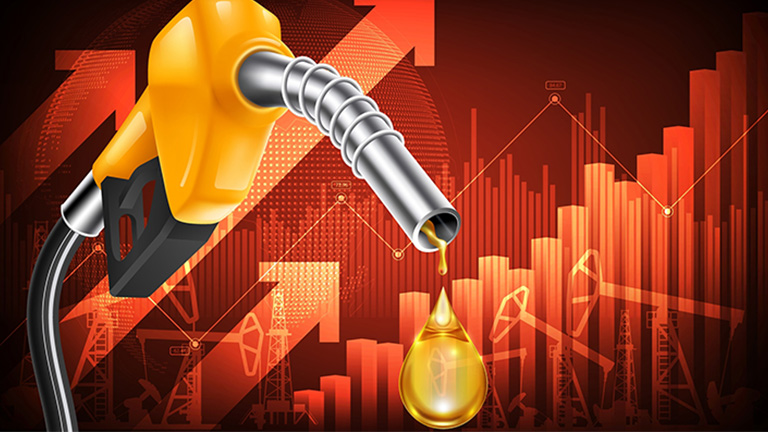
Russia’s war in Ukraine has upended fuel prices around the world; in August, France saw long queues at the pump and last summer brought astronomical prices to the entire European Union, making transportation – a necessity – often come with a luxury price tag. Coupled with heightened fuel demand as the world transitioned to a post-pandemic landscape, fuel prices became volatile very quickly.
On February 23rd 2022, the day before Russia’s invasion, Brent Crude, which is priced in US dollars, was hovering around $100 per barrel. In just a week, the global oil benchmark had shot up to $118. By March, it was around $133 per barrel. Throughout the year, fears of energy shortages were heightened, and both fuel at the pump and home energy prices put pressure on families all over Europe and the world.
Now, as the year has passed, a G7 and European gas cap have been put in place, and prices at the pump seem to be slowly ticking down. Governments throughout Europe are stepping in to try and protect their citizens from predatory pricing tactics, but with the depths of winter looming and many other factors, families should cut travel where possible and seek out low fuel prices to drive down the market overall. Below $84 now, the price of Brent Crude is expected to see more turbulence in the new year, reaching an estimated average of $92 in 2023.
The Rocket and The Feather
“Rocket and feather” fuel pricing is a term that indicates that fuel prices shot up and are coming down at the pump more slowly than they are in reality. As supermarkets, gas stations, and other providers try to anticipate volatility in the market for years to come and try to boost their top line revenue, they are keeping prices higher than the market. In the UK, both the Committee for Risk Assessment (RAC) and the Competition Markets Authority (CMA) are investigating the situation.
Supermarkets, which are often thought of as having the cheapest fuel prices, are failing to pass down the lower wholesale costs of oil to the consumer market. Governments have started to issue energy credits to combat rising energy prices within homes, but at the pump, the actions that can be taken are a bit more limited.
Global Implications
Brent Crude, and oil in general, do not operate in a vacuum. The market conditions and prices are impacted by every single nation on the planet. One major unknown in oil prices is the demand for oil and fuel in China. India and China, throughout 2022, have been buying oil from Russia, while many other nations banned Russian oil or have cut back to reduce their dependence on the country. This keeps other sources a bit cheaper than if India and China both tried to buy oil from other sources like the Middle East, Africa, and Latin America.
For decades, China has been the largest importer of oil in the world. But now, as China grapples with a booming Covid-19 catastrophe after letting go of its “Zero-Covid” policy, its future oil needs are in question. The Chinese economy is buckling, reducing the country’s need for crude oil, but whenever it recovers, a boom of additional competition amongst buying countries will drive fuel prices sky-high.
More broadly, if there is a global recession, which has been in question for many months, then economic activity could shrink, lowering the global need for oil. However, Russia has threatened that it will stop supplying its resources to any country that participated in the oil price cap, and if it follows through on that threat, then global supply would be immediately cut, causing the prices to shoot higher. With so many factors at play, no one should get too comfortable with the current prices at the pump.
Long Road Ahead
Experts are saying it could take a number of years to reach pre-war fuel prices. In the meantime, governments need to focus on keeping a steady supply, protecting drivers from price-gouging and profit-hungry retailers, and transitioning to clean energy as quickly as possible. For truck fleets and individual drivers, the best answer thing to do is to optimize routes, shop around for oil prices, and operate with lean resources until the global landscape recovers.
Next-gen tolling – EETS with 4G connectivity
Advanced EETS devices ensure uninterrupted coverage across Europe, faster data transmission, and higher network stability.